Why Reactive SEO Breaks Down

Reactive SEO is part of the job. We can be proactive most of the time, yet core updates still roll out, migrations happen, major content changes shift internal structures, and sometimes a competitor previously sitting on Page 2 is fast approaching the Top 3.
In those moments, analysis becomes urgent for a few reasons:
Clients want clarity and a plan of action
Internal stakeholders want reassurance
Roadmaps pause while resources are redirected
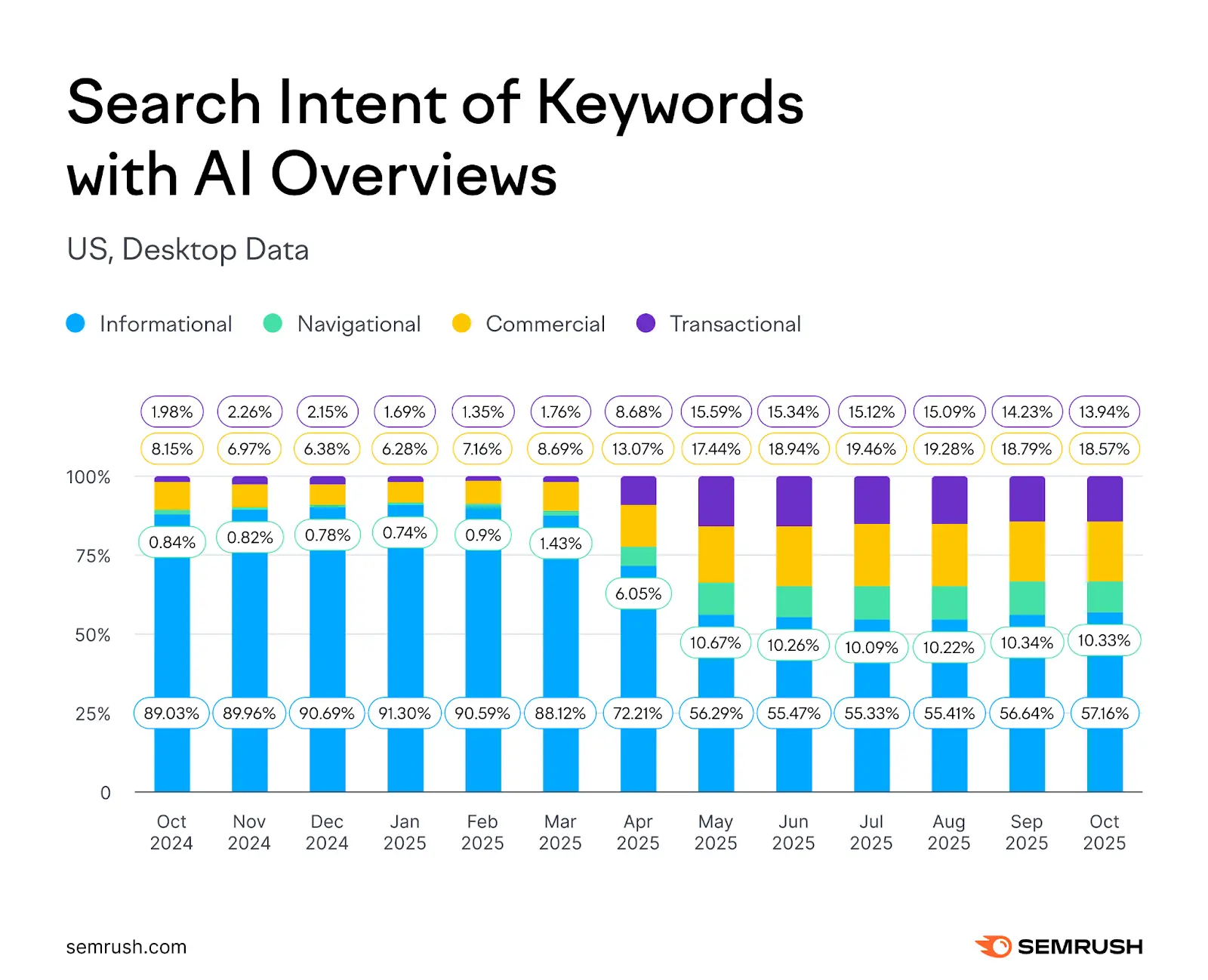
Ad hoc keyword impact analysis is, therefore, business-critical, particularly for head commercial or transactional terms where AI Overviews appear relatively infrequently. Yet, the workflow behind it is rarely designed to be efficient; reactive moments like these often mean manual deep dives, heavy spreadsheets, and senior time being redirected at short notice.
During my first year in SEO, while COVID-19 was busy disrupting the global economy and catalysing a complete overhaul of search behaviour, I investigated the impact of seven major algorithm updates for four clients across six markets - it was not a gentle onboarding. As a result, I realised very early on that impromptu keyword impact analyses were the recurring meetings no one had in their calendar, yet everyone was expected to reshuffle their week to attend.
To stay on track with delivering the tasks in my clients’ SEO roadmaps, I built spreadsheet templates to absorb much of the data preparation and structuring, and spent the saved unplanned time understanding the real drivers behind performance changes. Nowadays, we can scale this approach further with the tools we have at our disposal, making processes like these smarter, faster, and more accessible across teams.
Reactive SEO requests are absorbing far more time than they should. To safeguard an organic strategy, we need to remove the structural friction behind ad hoc, process-driven analyses and enable our SEO specialists to apply context and expertise to emerging patterns, rather than spending time assembling them.
The friction inside ad hoc keyword analysis
A typical reactive workflow is familiar across most SEO teams.
Data preparation
Record top-level ranking changes
Export ranking reports
Import reports to a spreadsheet
Remove duplicate rankings
Data structuring
Combine and deduplicate keyword lists
Pull baseline and comparison rankings
Overlay search volume
Apply the CTR curve
Group keywords into position buckets
Analysis
Identify winning and losing themes
Build visualisations
Draft insights
Deep analysis
Investigate specific keyword/page losses
Recommend next steps
None of this is conceptually difficult - it’s just very manual.
Historically, a thorough review took about 3 hours and drove valuable insight with a clear output, but roughly 75% of that time was spent assembling the data view rather than interrogating it.
Since these reviews are reactive, they also arrive unplanned, so the three hours have to be found somewhere. In practice, that usually meant delaying planned deliverables, stretching scope, or having difficult conversations to align on which analyses were worth pursuing and which weren’t.
If the analysis itself could be completed in a fraction of the time, the conversation changes. Insight can be gathered more frequently rather than selectively. Patterns can be spotted earlier. Emerging risks can be addressed before they escalate. Ultimately, reactive work becomes less disruptive, and the balance shifts back toward proactive optimisation rather than defensive response.
That’s the hidden friction inside reactive SEO.
Why reactive SEO breaks down
Reactive SEO breaks down when teams can’t efficiently and quickly move from signal to strategy. In volatile periods, particularly during core updates, the time between ranking movement and informed action matters.
I’ve found it useful to think about this as decision latency - the gap between identifying a signal and acting on it.
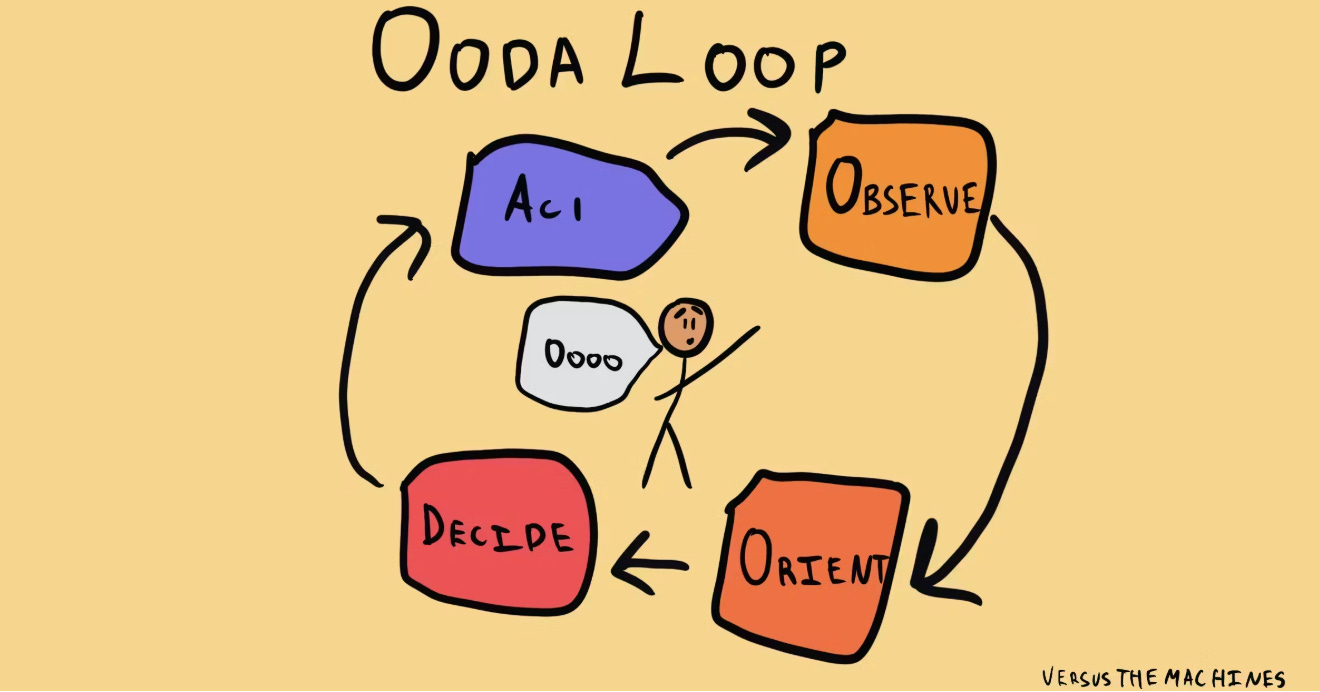
The longer the window, the harder it is to remain both reactive and strategic. This is by no means a concept unique to SEO; organisations across industries consider reducing decision latency to be a competitive advantage. Strategic frameworks like John Boyd’s OODA loop emphasise the importance of shortening the cycle between observation and action.
In SEO, the constraint often sits inside process-driven analysis. The question, then, is how to remove that friction without losing the depth of insight the original analysis provides.
Reducing keyword analysis from 3 admin hours to 30 strategic minutes
We decided to treat ad hoc keyword impact analysis as a systems problem rather than an operational inconvenience. Our goal was to remove the repeated mechanical steps that added friction to this reactive moment, without compromising our analytical standards.
As a solution, we built our own workflow that compares two ranking datasets and standardises the comparison logic automatically. This now handles the mechanical steps from the first three stages of our original process, and takes about five minutes to execute.
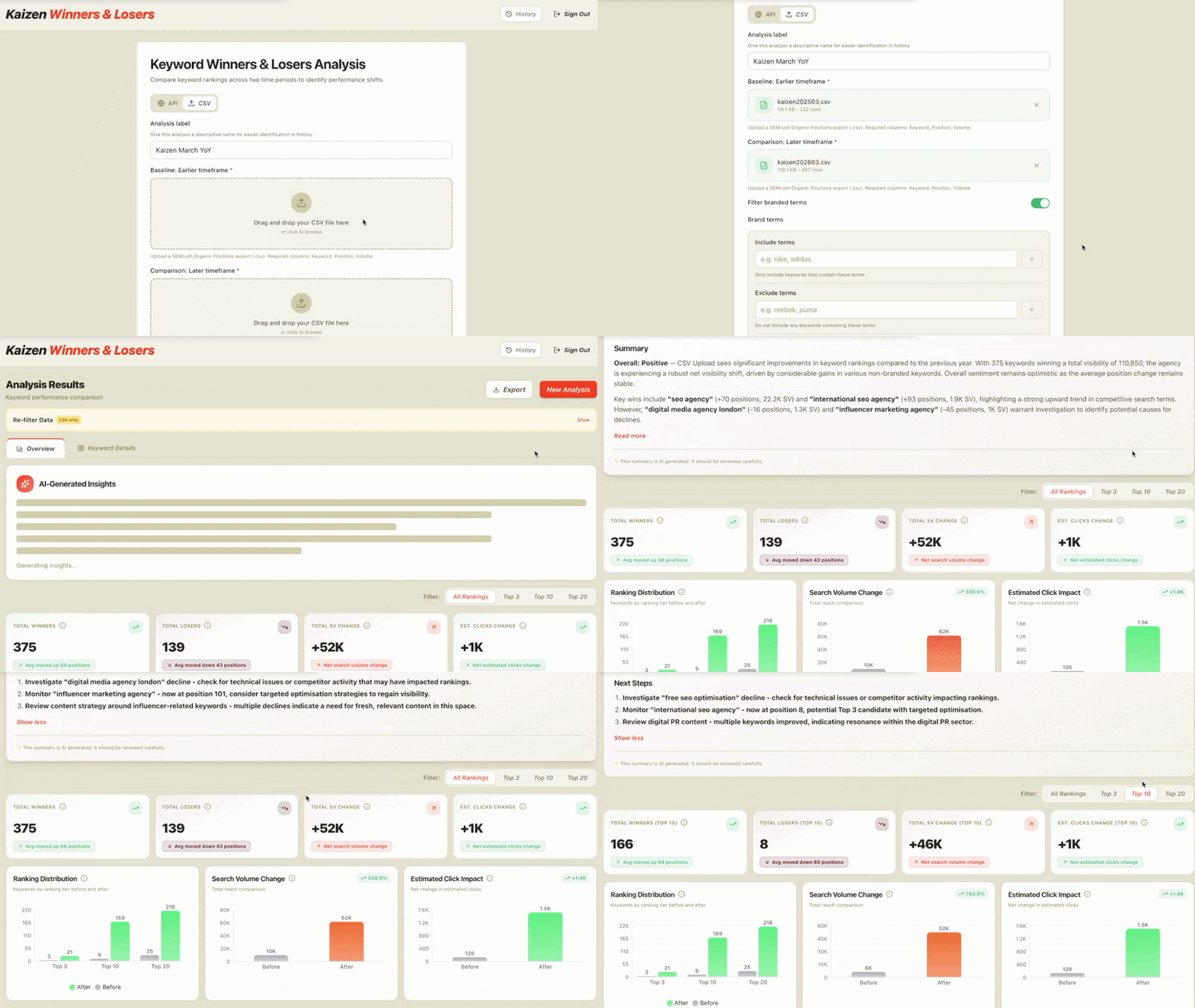
Within the interface, we use AI only to draft high-level thematic observations across the dataset. Otherwise, the tool’s analytical core is predictable, deterministic automation built in Python, so there’s no room for error. The deep analysis and decision-making remain human.
The output presents a clear comparison view that highlights meaningful movement immediately.
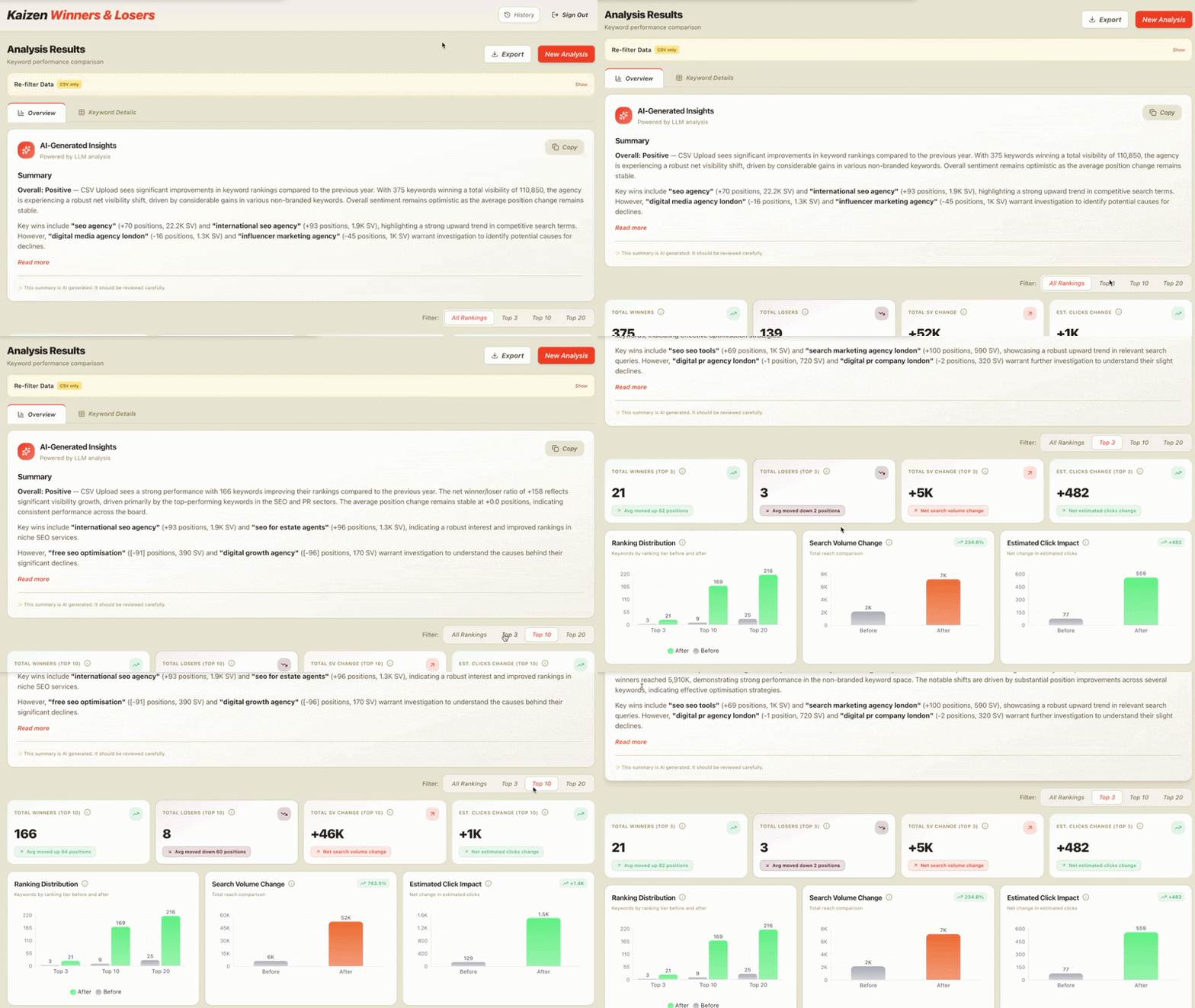
Now, we can almost instantly see whether:
Top 3 keyword coverage has materially shifted
Losses are concentrated within a specific category
High-volume commercial terms have dropped off page one
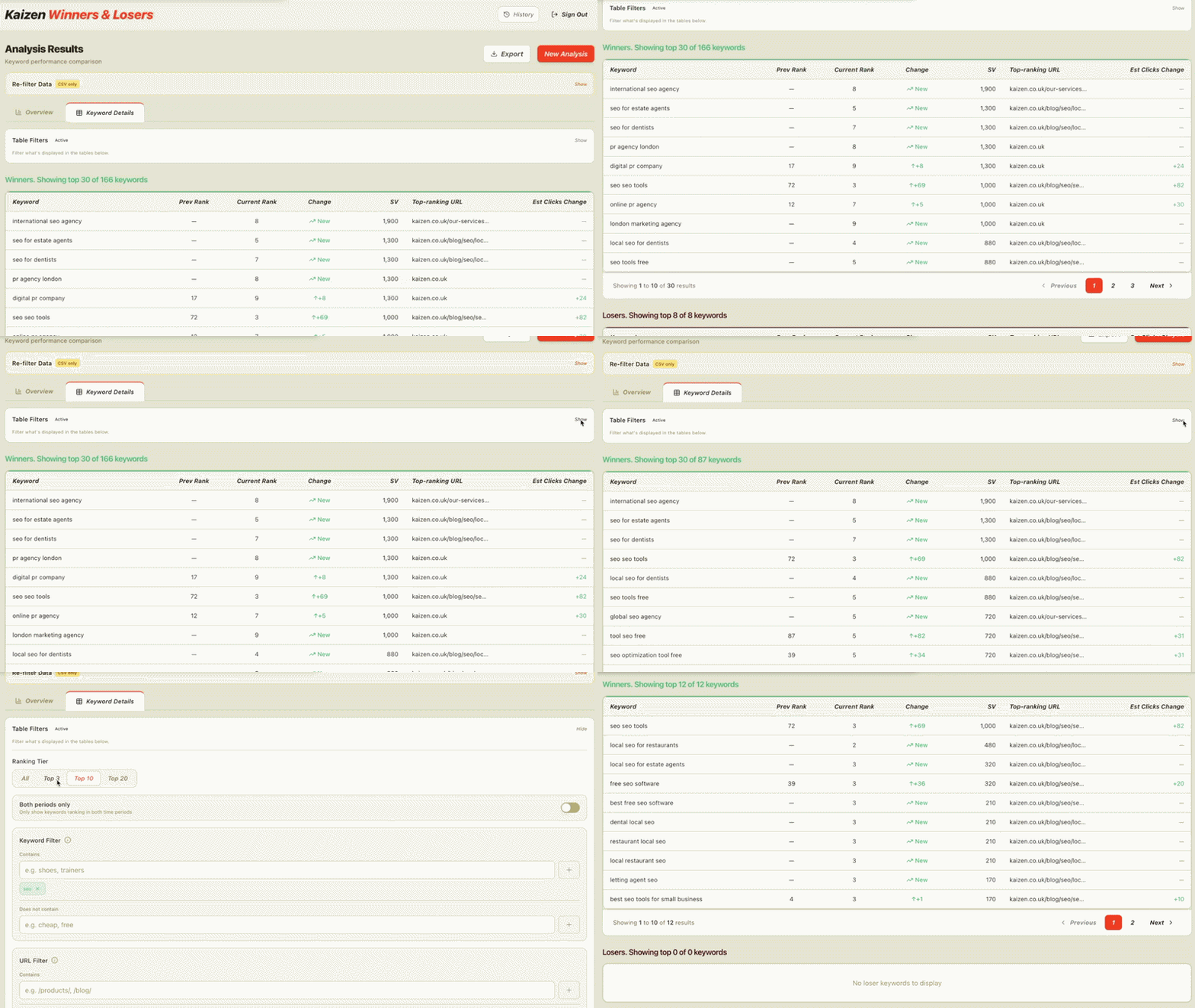
So now, instead of asking what happened, we can focus on why it happened and what decision we’ll make next. It’s also a practical example of a broader principle I discussed in my previous article: automation should free teams to elevate thinking, not only accelerate output.
What changes when friction is removed?
The most obvious outcome is speed. Insight can now be shared on the same day volatility appears, without making any difficult trade-offs.
The less obvious outcome is strategic capacity. When mechanical analysis time drops from three hours to 30 minutes, specialists spend more time contextualising keyword movement, assessing commercial implications, and shaping action plans.
As a result, the reactive work begins to inform roadmap direction rather than interrupt it.
Where this workflow now applies
Although core updates were the original catalyst, the workflow now supports a wider range of reactive scenarios:
Monthly reporting deep dives
Post-migration impact assessments
Major content or category launches
Post-implementation performance reports
Digital PR campaign keyword impact validation
In each case, the objective is the same: remove friction from comparison logic so specialists can focus on interpretation.
Principles for modernising ad hoc keyword analysis
For teams reviewing their own reactive workflows, a few things have stood out from our side.
Define comparison logic early to save you a lot of back and forth later on, so work out how you’ll group rankings, estimate impact, and what actually counts as meaningful movement - this saves a lot of back and forth on data integrity and visualisations later down the line.
Only automate the repetitive parts and leave the thinking to your SEO experts. Machines can own the predictable steps, like handling duplicate rankings, grouping positions, and applying CTR curves, and AI can even pull out trends for you - but don’t let machines interpret what it all means and decide what to do next.
Prioritise what matters commercially; sorting your data by search volume or estimated clicks makes it much easier to focus on what’s genuinely impactful, rather than getting lost in noise.
Make segmentation possible to dive deeper into critical areas and trends appearing in your data, quickly isolating performance by URL, subfolders, or keyword themes.
More broadly, remember the end goal is to spend less time pulling data together and more time actually thinking about what it means, rather than simply producing reports faster!
Reactive SEO rarely breaks down because teams lack the capability. It breaks down when slow, process-heavy analysis delays the move from signal to strategy. Reducing one high-frequency workflow from three hours to 30 minutes creates space for something more valuable in those moments: context, insight, and decisive action.
Fancy a free brand audit? Book a short intro call!
Things worth reading
The OODA Loop - John Boyd, 1995
A strategic decision-making framework (Observe, Orient, Decide, Act), emphasising that organisations gain advantage by shortening the cycle between observation and action.
Leverage Points: Places to Intervene in a System - Donella Meadows, 1999
A foundational essay in systems thinking that explains how small structural changes inside complex systems can have disproportionate effects, offering a useful lens for improving operational workflows.
Semrush AI Overviews Study - Semrush, 2025
A large-scale analysis of Google AI Overviews examining where they appear most frequently across query types.
 | A guest post by
|